


I won’t make this long. Can I explain why parallel trends breaks down using a simple example about compositions of groups? I’m going to try. I flipped a coin and it came up heads twice.
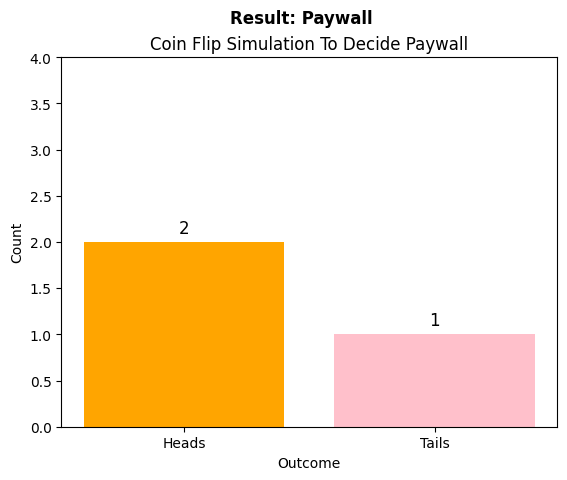
Thanks again everyone for your support! This is a labor of love and I hope you enjoy this post. It’ll be paywalled unless you’re a subscriber due to the randomization of the paywall I use for my non-Claude code series. Enjoy!
Broken Parallel Trends
When there are two groups, one treated and one untreated, and two time periods, then we know the work of the control group in difference-in-differences. It is to impute the untreated potential outcome (ie the counterfactual) for the treatment group. And it does that using two things:
It uses its own first difference to replace the counterfactual with its own observed value.
And it’s accurate if parallel trends holds.
All the rest is details. They matter but if you have to distill it to something memorable that’s it. Take the first difference, and impute, which is legal to do if parallel trends.
So when is that not going to work? Well it won’t work if you don’t have a control group of course. That’s one thing. It won’t work if you don’t have two periods. And it won’t work if parallel trends is not true.
Let’s focus on the last one. Why is parallel trends broken in the first place?
You can really over explain this. Or let me say it another way. There are many ways to talk about this, all fruitful and needed, but I want to talk about it using covariates. I’ll use this as my example: biological men and biological women.
